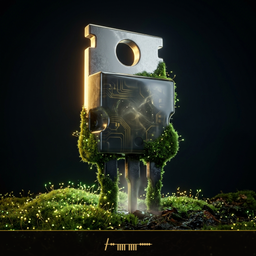
The Plain Facts, Carved
What It Is
An LM78XX-based breadboard voltage regulator — the oldest stone in the garden’s hardware years. A regulator on a breadboard: the raw supply at one end, the civilized voltages at the other, and the LM78XX family doing what it has done since the 1970s — swallowing the storm so the circuit downrail never hears it.
The idea is breadboard-native: plug it in at the rail and every experiment after it drinks a known voltage instead of whatever the wall is doing that day. The 78XX parts are linear, dumb, and immortal — drop a number, get a rail.
It is a first stone in the literal sense: the piece that made every later experiment possible, because experiments need clean power before they need ideas.
Told in the Seanchaí Tradition
The Build Story
Every river in the old stories has a milldam somewhere, and every milldam has a keeper, and the keeper’s whole job is ingratitude: the mountain sends flood after flood, winter after winter, and the keeper lets through exactly so much water, never a litre more, so that the wheel downstream turns at its own pace and the flour comes out flour. The flood never stops being a flood; it just never reaches the wheel as one. That was the whole gospel of this stone, and it was the garden’s first sermon, worked out on a breadboard in 2011 when the maker in Athlone was younger than most of the components. The wall is the mountain — it sends whatever it sends, surging, sputtering, thundering through cheap supplies. The LM78XX is the dam: linear, patient, a part design older than the maker himself, standing in the current and letting through exactly five volts, or nine, or twelve, whichever number you stamped the dam with. Every stone in the Elder grove downstream drank from this one first. Nothing is built on the flood, says the milldam. Everything is built on what I let through. The moss grows on it like silt on a keeper’s stone, quiet and earned.