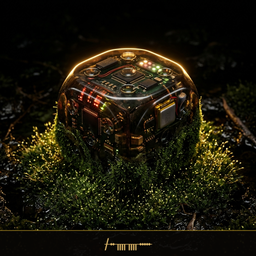
The Plain Facts, Carved
What It Is
Electronic dice, built from Make: Electronics Experiment #23 — the book that taught a generation of benches to solder. A press of the button, a flurry of blinking, and the pips settle: a proper roll, cast in LEDs instead of bone.
The circuit is the experiment as the book sets it out, worked on the bench until it rolled true: a timer’s pulse caught and cut into six faces, the LEDs showing whatever the electrons draw. No arduino needed — this is discrete-component dice, the kind you can explain with a napkin.
It exists because every workshop needs its first finished thing, and dice are honest: they either work or they don’t, and everyone at the table can tell.
Told in the Seanchaí Tradition
The Build Story
At Samhain the old houses threw bones, and the year’s fortunes were read from how they lay — the bone knows, they said, and no one argued, because at the year’s turning the future has to come from somewhere and bones are as honest as anything. In time the bones became dice, and the dice became the property of every gaming table in the world, and the throw stopped predicting the year and started deciding Saturday night — which is the same job at a smaller scale. This stone is from the very first shelf of the Athlone bench, 2011, when the maker was young enough that a book was still the fastest teacher: Make: Electronics, the experiment with the rolling pips, worked until the circuit rolled true. There is no processor in it; the dice think the way dice have always thought — by being thrown, and falling, and showing you what fell. The throw doesn’t lie, the old story says, it just doesn’t promise either. Six pips of LED, one button, and the whole ancient contract between chance and the table, kept by a circuit the size of a matchbox. The moss grows on it like the felt on a table someone loved.