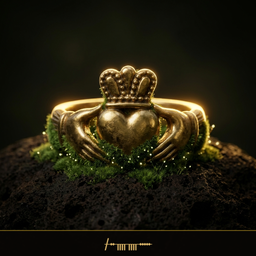
The Plain Facts, Carved
What It Is
A photo log, page by page, of making a Claddagh ring for Peyton’s birthday — from resin print to gold-plated finish. The Claddagh is the ring of the west coast: two hands clasping a heart under a crown, for friendship, love, and loyalty worn in that order.
The build runs the modern course of the old design — printed in resin, worked smooth, then plated so the gold sits on the surface as it would have sat through it in a Galway workshop three hundred years ago. Every stage is photographed, so the making is itself the record.
It exists because a birthday is a deadline the old smiths never had, and because some gifts are not bought — they are made.
Told in the Seanchaí Tradition
The Build Story
The story of the Claddagh is a fisherman’s story, and all fisherman’s stories are about return. Richard Joyce, so the west tells it, was taken from the Galway boats and sold into Algiers, and fourteen years in a goldsmith’s bench there he learned the trade no one meant him to learn; and when the king offered him freedom he had already drawn in the dust the hands and the heart and the crown — the friendship he’d lost, the love he remembered, the loyalty that got him home. The ring came back to Claddagh and never left. So when a birthday came round this garden did what the story commands: it went to the bench. A resin print instead of a stolen smith’s ingot, a plating bath instead of a king’s ransom, a weekend instead of fourteen years — but the order of the making was the same, print by print, plate by plate, photographed the way a story is witnessed. A gift made is worth two bought, says the west, and the moss grows on this stone’s north face the way the crown sits — pointing up.
plays alongside 4 reels in the garden’s film-house